
The Future of Olympiads & What Schools Must Understand Moving Forward
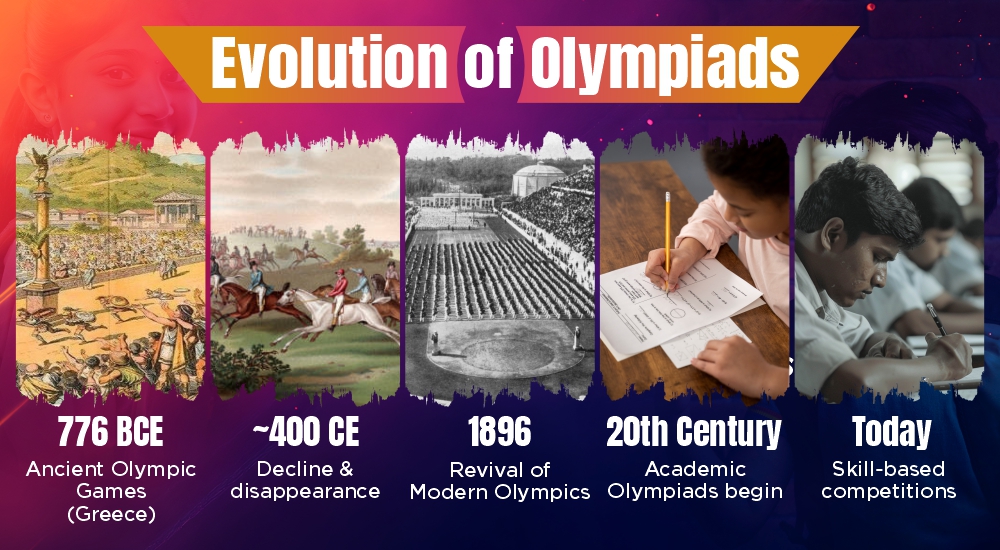
Today “Olympiad” in schools are the subject wise competitive exams that are multi stage, high-level patterns bringing excellence and challenge which is similar to the ancient and modern Olympic Games.
The origin from which the whole idea of Olympiads emerged.
The earliest Olympics were religious and athletic festivals held at Olympia in Greece, traditionally starting in 776 BCE and held every four years.
The four-year cycle between these Games was called an “Olympiad”, and Greeks even used Olympiads as a way to count time management instead of ordinary years.
But the ancient Olympic Games slowly declined as Greece came under Roman rule and later Christian emperors condemned them as pagan rituals.
Around 400 CE, the Games were officially abolished, and the Olympiad as a competitive cycle disappeared for many centuries.
And then in the late 19th century, French educator Pierre de Coubertin led the movement to revive the Olympics as an international, secular sporting festival.
The first modern Olympic Games were held in Athens in 1896, and the four-year cycle was again named an “Olympiad” (e.g., I Olympiad 1896–1899, II Olympiad 1900–1903, and so on).
And then the term “Olympiad” from the sports tradition found its name added in the difficult, proof-based competition held in cycles (like the Maths Olympiad).
So what was initially a benchmark of performance in sports now also checks the academic excellence in schools. This helps educators identify high-performing students, encourage healthy competition among students and push learners to think beyond their level.
And now as the future is evolving, there is a need for olympiads to be at par with the future so that schools can adapt to the changes and students stay updated when they live the upcoming future.
So let’s look into what is the future of olympiads that awaits and what schools should understand.
Why the Current Olympiad Approach Needs Rethinking
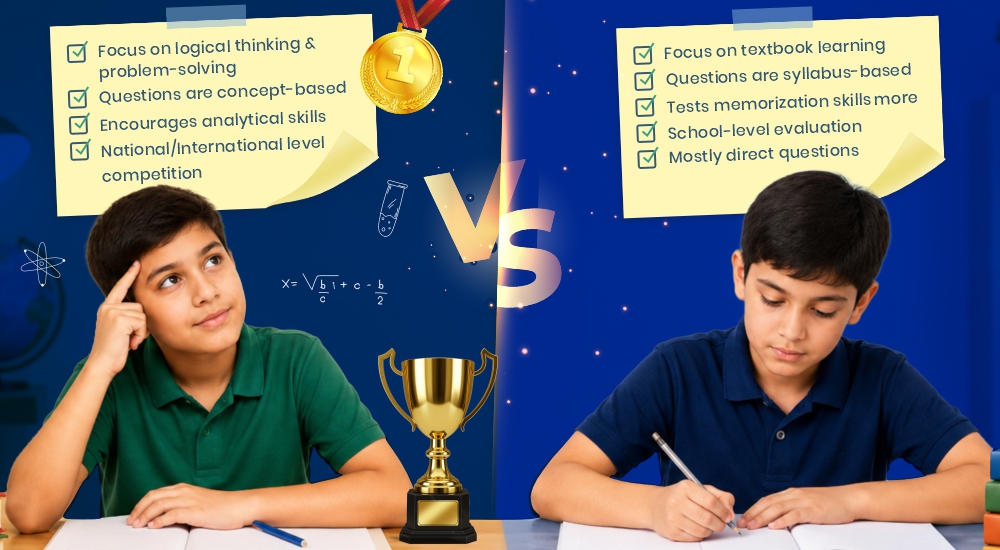
Olympiads are indeed one of the best ways a student can enhance their logical reasoning & critical thinking capacity and analytical skills. But in many schools, Olympiads are still treated as:
- Additional exams
- Rank-focused competitions
- One-time performance events
Which leads students in just treating it as last-minute preparation creating more pressure on them to perform where they end up rote learning the concepts.
And in this many students keep struggling even though they do not lack ability because they lack the structure’s guidance or the understanding of what the right approach is.
The Shift: How Olympiads Are Evolving
Education itself is evolving so Olympiads have to evolve with it and accordingly across all the learning systems, one shift can be clearly seen where everything is moving towards:
- Conceptual Understanding Over Memorization where students should know how to apply the concepts rather than just rote learning and then recalling it.
- Problem-Solving Over Pattern Recognition which is why the questions are becoming more application based which requires deeper thinking.
- Continuous Learning Over One-Time Testing where Olympiads are no longer like one final exam that students attempt and then vomit out but requires consistent practice and reinforcement.
- Confidence Building Over Competitive Pressure giving students a chance to perform better when they feel prepared not out of the pressure of attempting exams.
Olympiad exam are increasingly being used to build:
- Logical reasoning
- Analytical thinking
- Decision-making ability
What This Means for Schools?
As the shift in Olympiads happens, it also changes the role of schools in conducting Olympiads. The major change being that they can no longer be treated as optional or isolated activities. Instead schools now should integrate Olympiads into regular learning by providing structured support and encouraging participation without creating any kind of fear so that the students focus on building understanding and not just achieve good grades.
If schools approach the Olympiads correctly, they can make Olympiads
- A structured tool to strengthen the academic foundations of students.
- A platform to build confidence among students so that they pass difficult situations easily.
- A system to build future-ready skills in students so that they see life better when they grow up.
The Gap Schools Need to Address
Despite this shift, many students still face challenges such as:
- Lack of clarity in concepts
- Inconsistent preparation
- Fear of complex questions
- Limited exposure to structured practice
This gap is not about capability—
It is about access to the right learning system.
What a Future-Ready Olympiad System Should Look Like?
To align with how Olympiads are evolving, schools need systems that are:
- Structured and progressive
- Concept-driven
- Practice-oriented
- Student-friendly and engaging
Such systems ensure that:
- Students build confidence gradually
- Learning becomes consistent
- Performance improves naturally
Where the Right Approach Makes the Difference
Creating this shift requires more than intent.
It requires the right combination of:
- Learning design
- Practice frameworks
- Student engagement methods
This is where structured Olympiad programs play an important role.
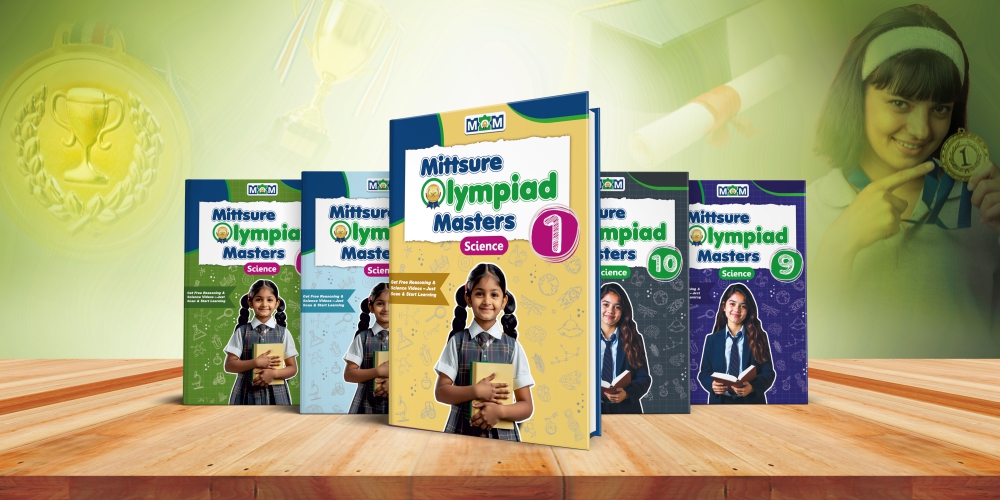
Mittsure Olympiad Masters is designed with this approach: focusing on helping students move from uncertainty to clarity through:
- Concept-first learning
- Step-by-step preparation
- Thoughtfully designed practice
- A focus on understanding, not pressure
The Role of Schools in the Future of Olympiads
Schools that adapt to this change will:
- Improve student participation
- Reduce performance anxiety
- Build stronger academic outcomes
- Develop confident learners
Because when Olympiads are approached as a learning journey rather than a competition, students are more likely to engage, explore, and excel.
The future of Olympiads is not about creating toppers.
It is about creating learners who can:
- Think independently
- Solve problems effectively
- Apply knowledge with confidence
For schools, this is an opportunity to redefine how Olympiads are introduced and implemented.
Because when the approach changes, the outcome changes.
Mittsure Olympiad Masters works with this vision: supporting schools in building learning environments where preparation is consistent, engagement is high, and confidence grows naturally.
Today “Olympiad” in schools are the subject wise competitive exams that are multi stage, high-level patterns bringing excellence and challenge which is similar to the ancient and modern Olympic Games.
The origin from which the whole idea of Olympiads emerged.
The earliest Olympics were religious and athletic festivals held at Olympia in Greece, traditionally starting in 776 BCE and held every four years.
The four-year cycle between these Games was called an “Olympiad”, and Greeks even used Olympiads as a way to count time instead of ordinary years.
But the ancient Olympic Games slowly declined as Greece came under Roman rule and later Christian emperors condemned them as pagan rituals.
Around 400 CE, the Games were officially abolished, and the Olympiad as a competitive cycle disappeared for many centuries.
And then in the late 19th century, French educator Pierre de Coubertin led the movement to revive the Olympics as an international, secular sporting festival.
The first modern Olympic Games were held in Athens in 1896, and the four-year cycle was again named an “Olympiad” (e.g., I Olympiad 1896–1899, II Olympiad 1900–1903, and so on).
And then the term “Olympiad” from the sports tradition found its name added in the difficult, proof-based competition held in cycles (like the Maths Olympiad).
So what was initially a benchmark of performance in sports now also checks the academic excellence in schools. This helps educators identify high-performing students, encourage healthy competition among students and push learners to think beyond their level.
And now as the future is evolving, there is a need for olympiads to be at par with the future so that schools can adapt to the changes and students stay updated when they live the upcoming future.
So let’s look into what is the future of olympiads that awaits and what schools should understand.
Why the Current Olympiad Approach Needs Rethinking
Olympiads are indeed one of the best ways a student can enhance their logical reasoning, thinking capacity, and analytical skills. But in many schools, Olympiads are still treated as:
- Additional exams
- Rank-focused competitions
- One-time performance events
Which leads students in just treating it as last-minute preparation creating more pressure on them to perform where they end up rote learning the concepts.
And in this many students keep struggling even though they do not lack ability because they lack the structure’s guidance or the understanding of what the right approach is.
The Shift: How Olympiads Are Evolving
Education itself is evolving so Olympiads have to evolve with it and accordingly across all the learning systems, one shift can be clearly seen where everything is moving towards:
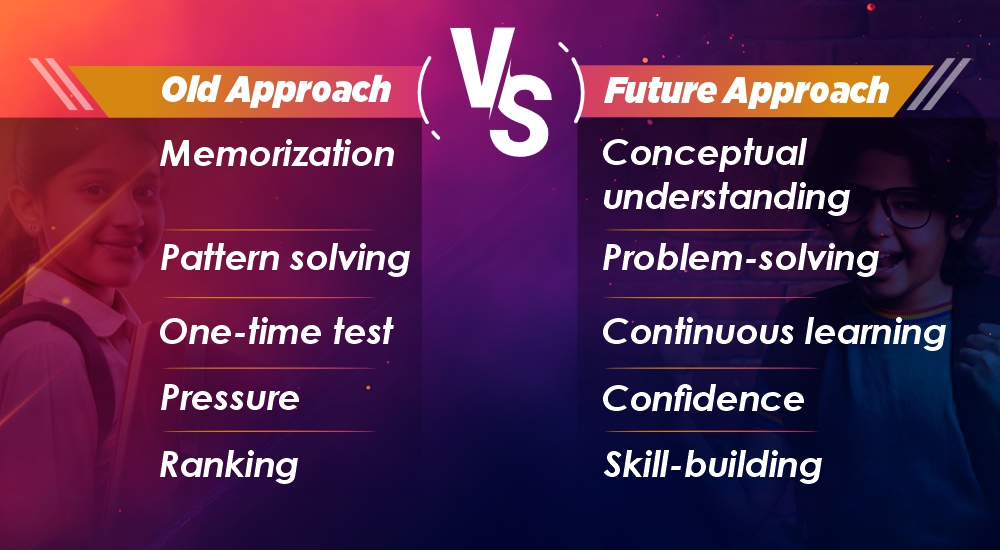
- Conceptual Understanding Over Memorization where students should know how to apply the concepts rather than just rote learning and then recalling it.
- Problem-Solving Over Pattern Recognition which is why the questions are becoming more application based which requires deeper thinking.
- Continuous Learning Over One-Time Testing where Olympiads are no longer like one final exam that students attempt and then vomit out but requires consistent practice and reinforcement.
- Confidence Building Over Competitive Pressure giving students a chance to perform better when they feel prepared not out of the pressure of attempting exams.
Olympiad exam are increasingly being used to build:
- Logical reasoning
- Analytical thinking
- Decision-making ability
What This Means for Schools
As the shift in Olympiads happens, it also changes the role of schools in conducting Olympiads. The major change being that they can no longer be treated as optional or isolated activities. Instead schools now should integrate Olympiads into regular learning by providing structured support and encouraging participation without creating any kind of fear so that the students focus on building understanding and not just achieve good grades.
If schools approach the Olympiads correctly, they can make Olympiads
- A structured tool to strengthen the academic foundations of students.
- A platform to build confidence among students so that they pass difficult situations easily.
- Olympiad build future-ready skills beyond classrooms in students so that they see life better when they grow up.
The Gap Schools Need to Address
Despite this shift, many students still face challenges such as:
- Lack of clarity in concepts
- Inconsistent preparation
- Fear of complex questions
- Limited exposure to structured practice
This gap is not about capability—
It is about access to the right learning system.
What a Future-Ready Olympiad System Should Look Like
To align with how Olympiads are evolving, schools need systems that are:
- Structured and progressive
- Concept-driven
- Practice-oriented
- Student-friendly and engaging
Such systems ensure that:
- Students build confidence gradually
- Learning becomes consistent
- Performance improves naturally
Where the Right Approach Makes the Difference
Creating this shift requires more than intent.
It requires the right combination of:
- Learning design
- Practice frameworks
- Student engagement methods
This is where structured Olympiad programs play an important role.
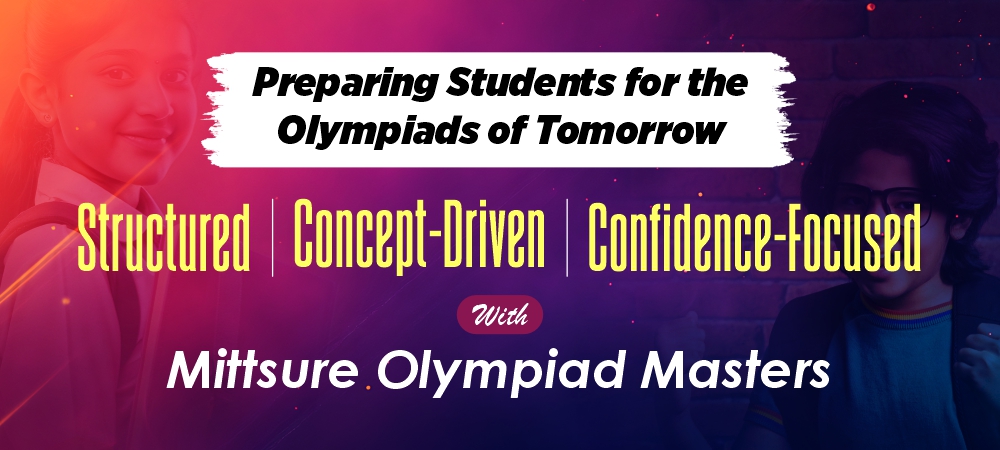
Mittsure Olympiad books for kids is designed with this approach:
focusing on helping students move from uncertainty to clarity through:
- Concept-first learning
- Step-by-step preparation
- Thoughtfully designed practice
- A focus on understanding, not pressure
The Role of Schools in the Future of Olympiads
Schools that adapt to this change will:
- Improve student participation
- Reduce performance anxiety
- Build stronger academic outcomes
- Develop confident learners
Because the benefits of Olympiad exam are approached as a learning journey rather than a competition, students are more likely to engage, explore, and excel.
The future of Olympiads is not about creating toppers.
It is about creating learners who can:
- Think independently
- Solve problems effectively
- Apply knowledge with confidence
For schools, this is an opportunity to redefine how Olympiads are introduced and implemented.
Because when the approach changes, the outcome changes.
Mittsure Olympiad Masters works with this vision: supporting schools in building learning environments where preparation is consistent, engagement is high, and confidence grows naturally.
FAQs
1. How are modern Olympiads different from traditional ones?
Modern Olympiads emphasize application, reasoning, and structured preparation, unlike traditional approaches that often relied on rote learning and last-minute practice.
2. At what age should students start Olympiad preparation?
Students can start as early as primary classes, as early exposure helps build logical thinking, curiosity, and a strong academic foundation over time.
3. How can students prepare effectively for future Olympiads?
Effective preparation requires a structured approach with concept clarity, regular practice, and gradual progression, so students can easily attempt Mittsure Olympiad Masters sitting right at the comfort of their school.
Recent Posts



- Mittsure Olympiad

- Mittsure Olympiad


- Mittsure Olympiad

- Mittsure Olympiad

- Mittsure Olympaid

- Mittsure Olympiad

- Mittsure Olympiad




- Mittsure Olympiad