
Time Management Tips for Students Preparing for Mittsure Olympiad Masters
Preparing for any exam is not just about studying the whole time and getting lost in the books but making every study session count where students learn the concepts and know what they are studying rather than just rote learning the facts. And Olympiads demand more attention as they do give an option to rote learn but test the reasoning and logical ability of a student. So many students feel underconfident or incapable with their performance when their preparation lacks the structure and consistency required in an Olympiad exam.
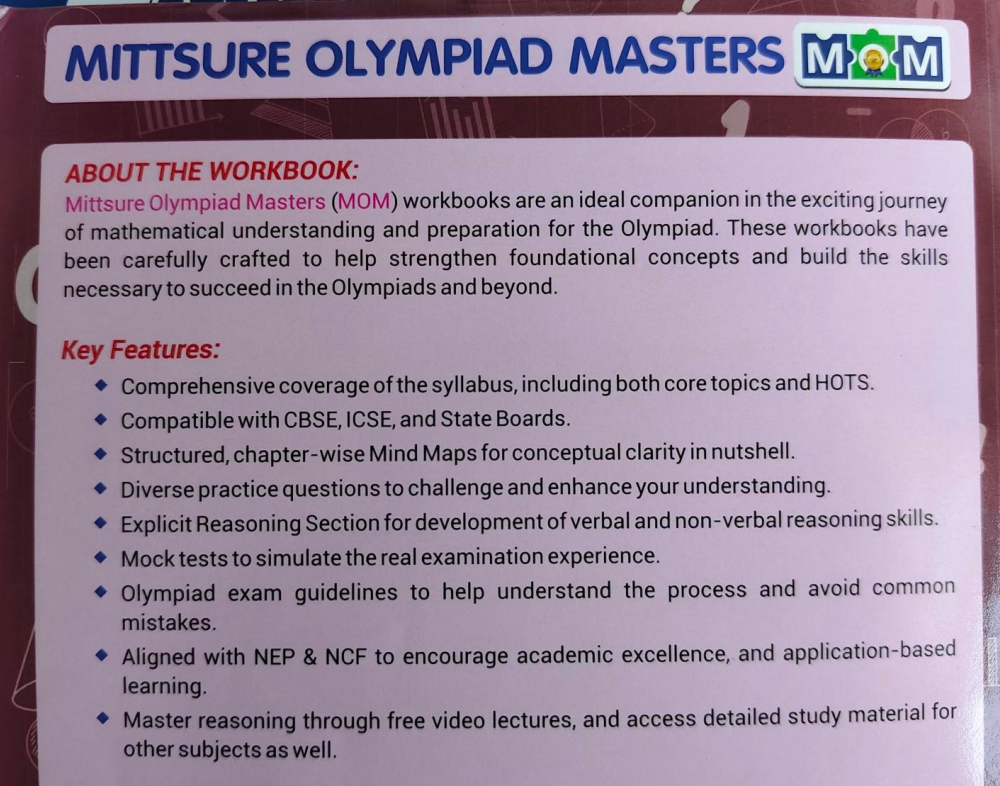
Even if the student has natural capability and is curious about concepts, the fear of Olympiads can be sorted out if they follow mittsure books for olympiad, which is planned practice as structured learning and practice has the ability to outperform the raw talent. And this can be ensured with proper time management as it avoids any kind of uneven preparation where students spend time on their favorite topics and, in that turn, the weaker areas get neglected.
Effective time management ensures that learning remains balanced, is progressive, and there is confidence-building throughout the preparation journey. So here are time management tips for students preparing for Mittsure Olympiad exam.
Time Management Tips every Olympiad Aspirant should take notes
Use the 3 Round Study Strategy to avoid last minute pressure
When there is a planned structure in which a student decides to study, there are lesser chances to deviate from that structure and focus better on the study pattern. This eliminates stress and builds confidence in them that what they are doing is correct. And what can be the proven structure that works for most of the students?
Complete every topic in 3 round study structure:
Concept Building where you understand the topics deeply and clearly and know the base of what the concept is all about.
- Practice and solve problems and learn how to apply the questions and implement them in practice.
- Keep revisiting, revising, and re reading the concepts in an interval, preferable once the next day, then after a week, and then after a month, and keep practicing the questions with mock tests on those topics to practice as if you are attempting the exam itself.
- According to learning science, this type of spaced practice helps form stronger neural connections and combats the natural tendency to forget learned information quickly.
Track qualitative study hours, not just total hours
There have been so many interviews of students who have topped the exams and have been asked how many hours they would study. But studying for longer hours does not ensure that you have learnt everything and will stop this time.
Studies show that the focused, distraction-free sessions even if it is for 25-30 minutes at a time, can improve retention far more than sitting for long unfocused hours.
And if you think you are sitting focused for long hours, there’s a neuroscience research highlighting how attention drops after about 45-90 minutes of continuous activity, and with short breaks students are able to consolidate memory better than long crashed sessions.

Practice Mock Tests to Transform Preparation Into Performance
If you are the brightest student, studied in the best possible way but do not attempt mock tests at all, you are just rote learning and not able to practice it in application. When you do not attempt mock tests you are just reviewing your understanding passively, but when you practice tests, it triggers your active recall (the process of retrieving information from memory). This strengthens your ability to recall that information during the real exam.
Our advice would be to schedule mock tests regularly (e.g., weekly or bi‑weekly) keeping it a part of your learning sessions. This way you analyse your results to see what are the time traps, the common errors, and your weaknesses.
Divide Time Strategically Between Concepts, Practice, and Revision
Whether you are following a 3Round Study Schedule or your own structure, a balanced preparation is important. If you do 80% of Concept Building, 10% of revision, and 10% of practicing tests, you will find it harder to apply the concepts and will also weaken your skill of recalling at the exam time. So an effective allocation with 40% learning, 40% practicing, and 20% revision is ideal.

Be consistent as it Builds Confidence and Reduce Stress
Consistency beats intensity. Learning science shows that regular, shorter study sessions reduce cognitive overload, build stronger habits, and make motivation more sustainable over time. Students who stick to a study rhythm report less stress and stronger confidence leading up to exams. So fix a specific daily time slot for MOM revision. Even 30-45 meaningful minutes every day compound into significant progress over weeks.
Recent Posts




- Mittsure Olympiad

- Mittsure Olympiad



- Mittsure Olympiad

- Mittsure Olympiad

- Mittsure Olympaid

- Mittsure Olympiad


- Mittsure Olympiad




- Mittsure Olympiad